
If you have ever gone in for an X-ray, a CT scan, or an MRI, chances are you saw a Radiographer or a MRT, who did your test. Most patients walk away with only a vague idea of what just happened, or who was actually responsible for making sure that image came out right.
I have been a Registered X-ray Technologist and Clinical Educator for over 20 years, and this is one of the most misunderstood roles in healthcare. Here is what radiographers actually do, and why the job is so much more than it looks like from the outside. Training is 2 to 3 years with continued education courses required throughout the MRTs career. The licencing professional body for Radiographers and MRTs is the CAMRT.
What a Radiographer Does That Most Patients Never See
Every hospital needs a general X-ray department. Not every hospital has advanced imaging like CT or MRI, but general radiography is a baseline requirement everywhere. Within that, radiographers work across an enormous range of settings, including the ER, outpatient clinics, and the OR.
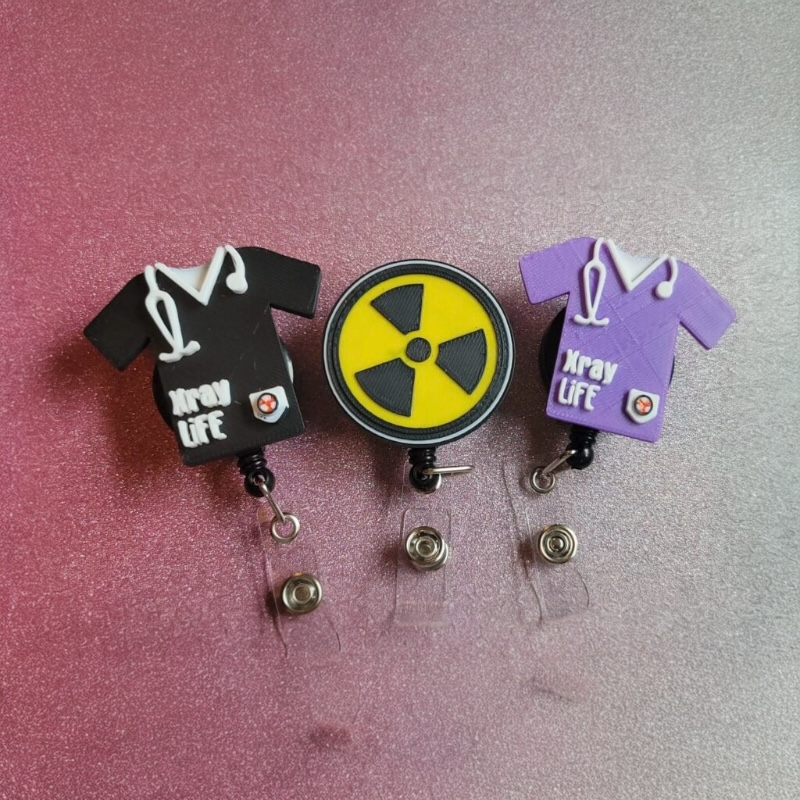
What makes this profession unique is how independently we work. Patients come in for an exam, and in most cases, the doctor who ordered the test is nowhere in the room. We are the ones assessing the patient, positioning them, operating the equipment, and making the judgment calls that determine whether the images are diagnostic. That takes years of schooling and exams to get right, and it means we are trusted to work at a high level with very little direct oversight in the moment.
How do Radiographers specialize in Medical Imaging
One of the best parts of this career is that it does not stop at general X-ray. Radiographers can specialize in different areas of medical imaging, and each path has its own skill set.
CT Technologists
CT, or Computed Tomography, captures millimeter-sliced images of a body part to find pathology that a plain X-ray simply cannot show. Contrast agents are often administered to add another dimension to what is happening inside the patient. If there is a lesion, contrast does an excellent job of outlining it clearly.
MRI Technologists
MRI uses a powerful magnetic field to generate its images. Safety in this environment is critical. Patients have to be carefully screened for any metal in or on their body before they go anywhere near the magnet, since metal can be a serious contraindication depending on what it is and where it is located. In some countries, you can actually become an MRI technologist without first training as an X-ray technologist, which shows just how specialized this branch of the field has become.
What a Radiographers Does During a Typical Shift
In a general X-ray department or clinic, it is common to see anywhere from 25 to 100 patients in a single day. The exact number depends on how many images each patient needs and how mobile or ambulatory they are.
The pace is fast, and the hours are physical. Technologists are often on their feet for seven or more hours at a stretch, moving between rooms, positioning patients, and adjusting equipment. Staying in shape and being able to react quickly matters just as much as technical knowledge does.
What a Radiographer Does Before They Ever Take the Image
A lot of patients assume the job is just operating a machine. That could not be further from the truth. Before a single image is even taken, we are already making assessments. Can this patient stand? How is their breathing, especially for a chest X-ray? If someone has a broken bone, we have to figure out how to get the imaging the surgeon actually needs to diagnose the fracture, without putting the patient through unnecessary pain in the process.
That often means angling the X-ray tube in specific ways and working carefully around the patient’s position and limitations to get a diagnostic image on the first try. It is a constant balance between image quality and patient comfort, and that balance is a skill in itself.
Why Radiographer Deserve More Recognition
Radiographers, MRI technologists, and X-ray technologists are a critical part of the healthcare system. A doctor orders the imaging, but we are the ones who have to know exactly what we are doing to deliver it. We work under the direction of a radiologist, who reports on and interprets the images we take, and often that means capturing multiple images in different positions to give the full picture of what is going on.

Xray Technologists and MRT’s are not nurses or doctors, but they are an equally important part of the healthcare team. As they say, it takes a village, and radiographers are a permanent fixture in that village, even if most patients never quite realize it.